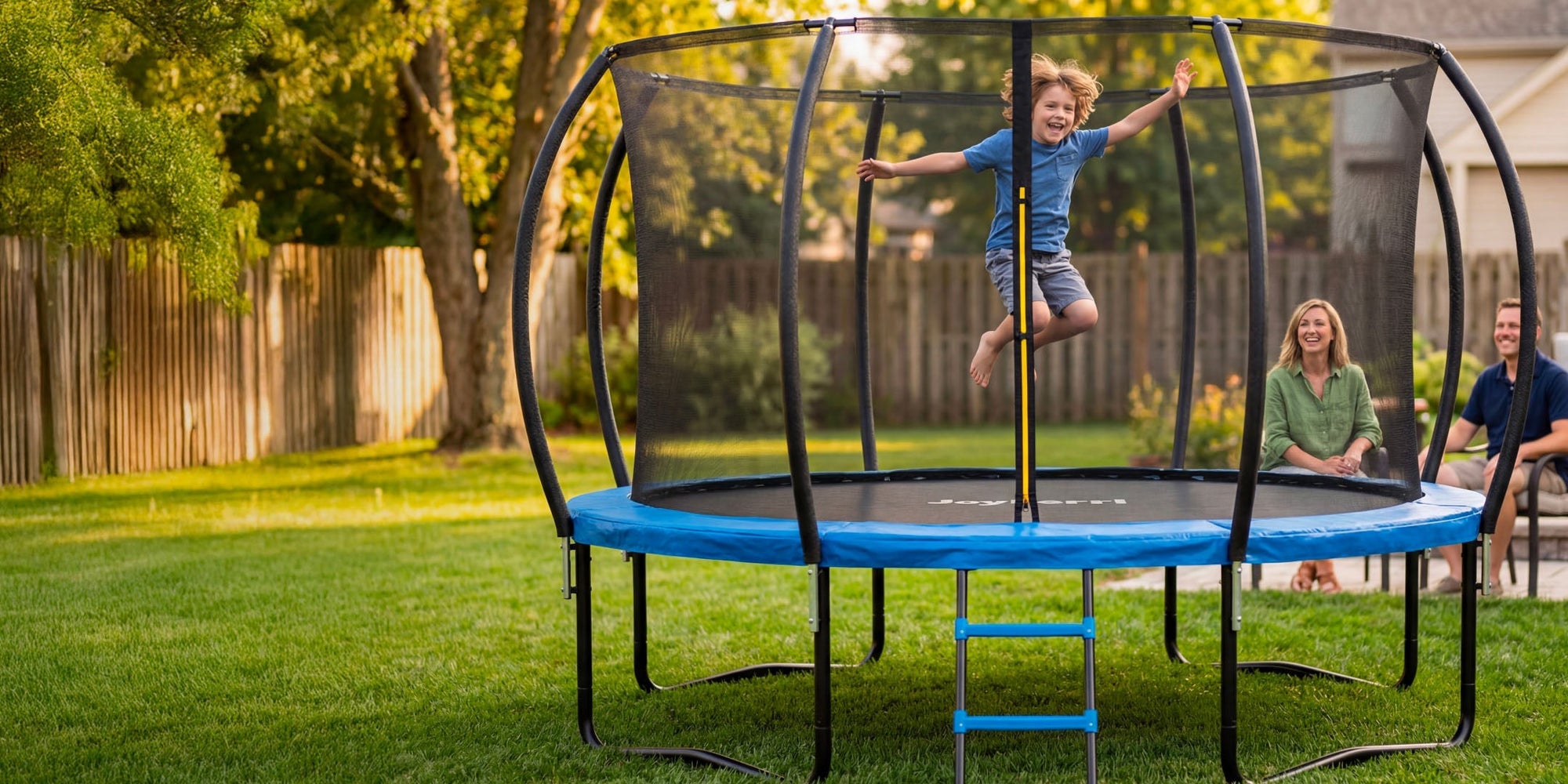

If you’ve ever watched kids bounce with pure delight, or felt that same little spark when you jump on a trampoline yourself, you already know trampolining is fun. But here’s the real question so many families ask: Does jumping on a trampoline burn calories… and does it actually count as a real workout?
The short answer? Absolutely.
The longer answer? Trampolining is a joyful, science-backed form of exercise that supports calorie burn, boosts your mood, strengthens your body, and keeps movement feeling playful instead of like a chore. Whether you're rebounding in the backyard or enjoying a few minutes of gentle bouncing during the day, trampolining supports overall health, not just energy expenditure.
Let’s explore why jumping is such a surprisingly effective way to burn calories—and why it may become your family’s favorite fitness routine.
How Trampoline Jumping Burns Calories
At its core, trampoline jumping works because it’s a full-body, low-impact activity that raises your heart rate, engages multiple muscle groups, and keeps your whole body moving in rhythm. Every time you bounce, your legs, core, and stabilizers fire up to control your landing and lift-off. That means even a few minutes of trampoline jumping can help you burn calories and feel energized.
This makes trampolining an effective workout for both kids and adults, whether you’re engaging in a high-intensity bounce session, practicing low-impact rebounding, or enjoying playful family jumping.
The Science Behind Rebounding
Decades ago, NASA famously discovered that rebounding could match, and sometimes exceed, the efficiency of traditional exercises. Their research showed that astronauts who rebounded experienced more muscle activation with less physical strain than when they jogged. That means you get a similar calorie burn to activities like running, but with far less stress on your joints compared to pounding pavement.
Other studies, including the American Council on Exercise, found that trampolining increases your heart rate quickly and keeps it elevated throughout your workout routine, making it a powerful form of aerobic exercise.
Calories Burned on a Trampoline (Calculator + Formula)
So, how many calories can you burn while you bounce on a trampoline? It depends on a few simple factors:
- intensity of your movement
- your body weight
- how long you're jumping
- whether you’re doing high-intensity movements or gentle bouncing
A trampoline workout gives you flexibility. You can go all-in with HIIT intervals or stick with minutes of moderate-intensity jumping for a steadier burn.
Calorie Calculation Formula
A simple way to estimate your calorie burn is:
Calories Burned = MET × Body Weight (kg) × Duration (hours)
Most trampoline sessions fall between 3.5–7 METs, depending on intensity.
Calories Burned Calculator Table (Example Outputs)
For a 150-lb person (68 kg):
- Light bouncing: ~200 calories per hour
- Moderate jumping: ~300 calories per hour
- High-intensity rebound workouts: 400+ calories per hour
That’s a great way to burn calories while having fun. Use this as inspiration, and plug in your own weight and duration to estimate the number of calories burned in your next trampoline session.
Key Health Benefits Beyond Calories
The benefits of trampoline use go far beyond how many calories you burn. Trampolining is a wholesome and playful way to support the health and wellness of your whole family.
Cardiovascular Strength & Endurance
Trampolining boosts circulation and gets your blood pumping quickly. Because it increases your heart rate in a gentle way, it’s excellent for heart health, stamina, and long-term cardiovascular health. It also has no harsh impact from running or jumping exercises.
Balance, Coordination & Motor Skills
Every bounce challenges your body to stabilize, helping you improve balance and coordination. Children, in particular, benefit as their motor skills develop, but adults also enjoy the reflex training. Over time, trampolining enhances proprioception, reaction time, and overall confidence in movement.
Muscle Strength & Toning
You activate many different muscle groups each time you bounce—your core, legs, glutes, back, and stabilizers all work together to support your movements. This helps build muscle, increase muscle mass, and tone the body in a natural, playful way.
Mental Health & Stress Relief
Need a moment of joy? Jumping is wonderful for mental clarity. The rhythmic movement, fresh air, and playful spirit offer a natural boost of mood-lifting endorphins. Even 10 minutes of jumping can reduce stress and support emotional well-being more effectively than many other physical activities.
How Trampoline Workouts Compare to Other Exercises
A trampoline workout is a unique hybrid—part cardio, part strength, part coordination. Here’s how it stacks up to more traditional options.
Trampoline vs. Running
Trampoline sessions can help you burn around the same calories per minute as jogging, but they’re easier on your joints. Unlike running or jumping on hard surfaces, trampolining absorbs impact, protecting the knees and hips.
Trampoline vs. Cycling or Elliptical
Cycling is great cardio, but trampolining engages multiple muscle groups, offers more variety, and feels more playful. It’s a more dynamic way to challenge your body and maintain consistency in a fitness routine.
Trampoline vs. Strength Training
While trampolining won’t replace weights or resistance bands, it complements them well by blending cardio with functional toning. Every jump improves stability and challenges your body in fresh ways, helping you burn more calories while enhancing whole-body strength.
Who Benefits Most from Trampoline Exercise?
Trampoline exercise is truly for everyone, from young children developing their first motor skills to adults seeking a fun workout.
Kids Building Motor Skills and Healthy Habits
Kids naturally love to bounce on a trampoline. This playful activity improves coordination, builds confidence, and helps them develop physical literacy early in life. It’s also a wonderful form of exercise disguised as fun.
Adults Seeking Fun, Low-Impact Fitness
Busy parents love trampolining because it fits into their day easily. Whether you’re jumping on a mini-trampoline indoors or spending 60 minutes outdoors on an Enclosed Trampoline, it’s a fun, low-impact way to stay active and manage weight.
Individuals Needing Joint-Friendly Cardio
Anyone who needs low-impact exercise will appreciate how gently trampolining supports the joints compared to running or jumping rope. It’s a safe, joyful way to keep moving, even if your knees or hips get sensitive during high-intensity training.
Interested in buying your own trampoline. It is helpful to know about trampoline maintenance before doing so.
Exploring the Full Value of Trampolining
So, does jumping on a trampoline burn calories? Absolutely. But trampolining is so much more than a way to burn calories or track calories per minute. It’s a joyful, sustainable, family-friendly form of movement that supports strength, balance, and coordination. It also improves cardiovascular endurance, emotional well-being, and long-term health.
If you’re ready to bring that playful energy home, explore JoyBerri’s UpSurge™ Enclosed Trampoline, designed with thoughtful safety features, high-quality materials, and all the bouncy fun your family could dream of.
Let the bouncing around begin—your next favorite workout routine might be waiting right in your backyard.